 ISLAMABAD, 10 November 2026 — In an era of Global crisises, from climate shocks to public health emergencies and navigating the emerging technologies of Artificial Intelligence, Science is no longer confined to a laboratory, its challenges are faced by citizens in their daily lives. Science is also a common language, a bridge across borders to build peaceful and sustainable societies.
This is the heart of UNESCO’s work, under the International Decade of Sciences for Sustainable Development (IDSSD) 2024–2033 framework, Science research and innovation is not aimed to solve equations, but #ForthePeople. As one of the world’s most climate-vulnerable countries, home to more than 255.2 million people, with approximately 67% of the population under the age of 30, Pakistan represents both a critical need and an extraordinary potential for scientific research, innovation, and regional scientific cooperation.
“For UNESCO, science diplomacy is not simply about advancing scientific knowledge. It is about building trust, fostering dialogue and creating opportunities for cooperation, even in the most challenging circumstances.” Mr. Fuad Pashayev, UNESCO Representative to Pakistan
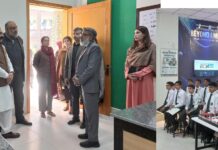
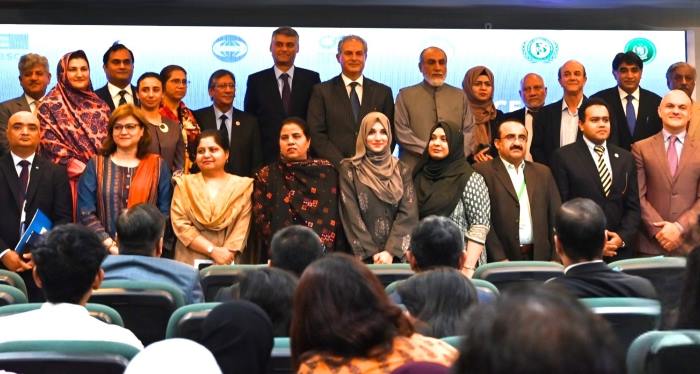
To strengthen the relationship between science and society, across borders, sectors and disciplines, UNESCO commemorated World Science Day for Peace and Development today at the Ministry of Science and Technology in Islamabad.
The national event was organized under the theme “Common Ground Through Science Diplomacy” in partnership with the Ministry of Science and Technology (MoST), the Pakistan Science Foundation (PSF), the Economic Cooperation Organization Science Foundation (ECOSF), the Commission on Science and Technology for Countries of the South (COMSATS), and the Pakistan Academy of Sciences (PAS).
Dr. Mohammad Akmal, Chairman, Pakistan Science Foundation in his welcome remarks highlighted the role of Pakistan in establishing the World Science Day. Whilst Mr. Ali Bahadur Qazi, Additional Secretary for Science and Technology, in his remarks, highlighted how the event provided an important platform for knowledge sharing and for research sharing. “Let us strengthen our partnership among governments, scientific institutions, universities, industry and development organizations”.
Reflecting the core theme, the day featured two high-level sessions designed to spark actionable dialogue among scientists, policymakers, students and the diplomatic community.
The round table ‘ Navigating Shared Challenges Through Science Diplomacy’ moderated by Dr. Aslam Baig (Secretary General, Pakistan Academy of Sciences), explored the meaning of Science Diplomacy today, and how scientific knowledge can be a tool to build trust, expertise and cross border cooperation.
From Paris to Samarkand: UNESCO Opens New Chapter in Its Global Mission
Speakers including Mr. Fuad Pashayev, Representative, UNESCO Pakistan, His Excellency Dr. Maen Khreasat, Ambassador of the Hashemite Kingdom of Jordan, Dr. Guido Licciardi, Italian Agency for Development Cooperation Islamabad, Dr. Muhammad Adeel, Director (ACDIS-II) and SD, Ministry of Foreign Affairs, Dr. Gul Muhammad Laghari, Senior Chief Technical (Science & Technology), Ministry of Planning, Development & Special Initiatives, highlighted what new pathways can be carved to leverage science diplomacy, whilst considering the pressing realities of climate change, water security, public health, food crisis and disaster risk reduction.
Building upon this foundation, the panel discussion, ‘Inclusive Science for Cooperation and Sustainable Development,’ offered a vital gender lens on the future of research. Moderated by senior journalist Ms. Myra Imran, the session asked confronted an uncomfortable truth, how can science advance when only 31.4% of researchers are women globally, and the women are significantly underrepresented in STEM leadership roles.
Distinguished panelists, including: Her Excellency Fatou Harerimana, High Commissioner of Rwanda; Ms. Sogol Jafarzadeh of UNU-INWEH; Prof. Seyed Komail Tayebi, President of the ECO Science Foundation; Prof. Dr. Bushra Mirza, Vice Chancellor of Fatima Jinnah Women University; and Dr. Humera Jamal from the National Commission on the Status of Women, spoke passionately about empowering women in STEM and the meaning of inclusive science.
They shared insights on how greater female leadership not only enriches Pakistan’s domestic scientific ecosystem but also supercharges international scientific cooperation and drives sustainable development forward. Panelists highlighted that a conducive environment and a feasible ecosystem is core, for females to flourish in STEM fields as young students to Adults in the Sciences field of work.
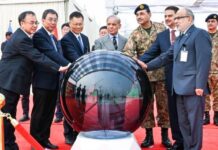
His Excellency Khalid Hussain Magsi, Federal Minister for Science and Technology presented appreciation certificates to young students who secured top positions in the International Science Competitions.
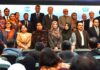
Ultimately, the dialogues held in Islamabad served as a powerful reminder that science knows no borders and leaves no one behind. By reaffirming a collective commitment to science diplomacy and inclusive participation, the commemoration underscored that unlocking Pakistan’s full scientific potential is not just an academic aspiration, but a crucial pathway in building peaceful, resilient and sustainable communities.