Editor’s Desk
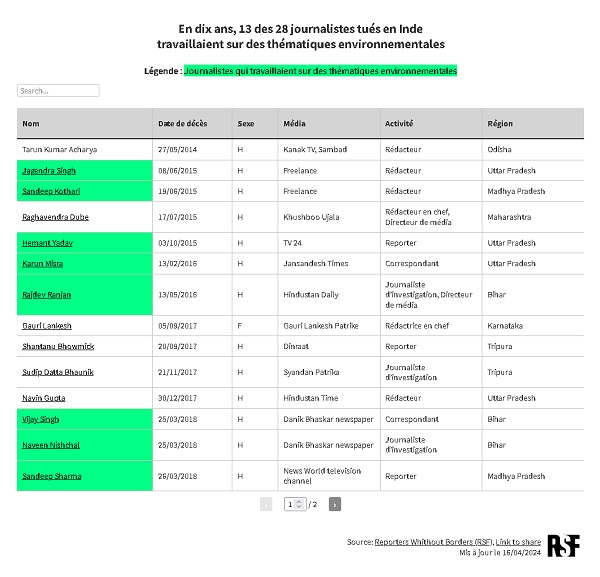
13 of the 28 journalists killed in India since Narendra Modi took over as prime minister ten years ago, including media directors, investigative reporters and correspondents, were working on stories linked to the environment. Protecting journalists and combatting impunity for crimes of violence against them should at the centre of the elections in which Modi is seeking another term, 15 other journalists murdered in connection with their journalism since 2014 were targeted for working on stories linked to corruption, organised crime, elections and a Maoist insurrection, Reporters Without Borders (RSF) says.
At least 13 of the 28 journalists killed since 2014 were working on environmental-related subjects, mainly land seizures and illegal mining for industrial purposes. Several were killed for taking an interest in India’s so-called sand mafia, an organised crime network that excavates sand illegally for the country’s booming construction industry. Closely linked to politicians and often protected by them, the mafia is quick to silence journalists who take too close an interest in its activities, and does so with complete impunity.
In its recommendations to candidates competing in these elections, RSF calls for the urgent creation of a system to guarantee the physical and digital security of journalists. To this end, account must be taken of the dangers linked to environmental issues.
Célia Mercier, Head of RSF’s South Asia desk says;
“It is alarming to see that half of the journalists murdered in the past ten years were investigating environmental issues, often linked to the activity of criminal groups, mafias that maintain strong links with local authorities and enjoy almost total impunity for the crimes of violence they commit against journalists to protect their financial interests. This is appalling. Thorough and independent investigations should be carried out as a matter of urgency into the cases of murdered journalists and those who have been the victims of murder attempts. On the eve of crucial elections for the future of journalism in India, we call on candidates to undertake to end this unacceptable impunity and to prioritise the safety of all journalists.”
 Journalists investigating the exploitation of natural resources by the sand mafias or other networks involved in mining have often been the victims of violent reprisals during the past ten years. One of the first was Jagendra Singh, a freelancer who died in June 2015 from the serious burns he sustained during a police raid. He had been working on a case of illegal sand mining involving the chief minister of the northern state of Uttar Pradesh.
In 2016, Jansandesh Times reporter Karun Misra was murdered in Uttar Pradesh and Hindustan reporter Ranjan Rajdev was killed in the northeastern state of Bihar. Both were shot dead by hitmen motorcycles as a result of their work on illegal mining activities. Sandeep Sharma, a reporter who was covering a sand mafia for the News World local TV channel in the central state of Madhya Pradesh, was killed by a dumper-truck that deliberately ran him down in March 2018.
Delhi-based French reporter forced to leave India in sign of growing crackdown on press freedom