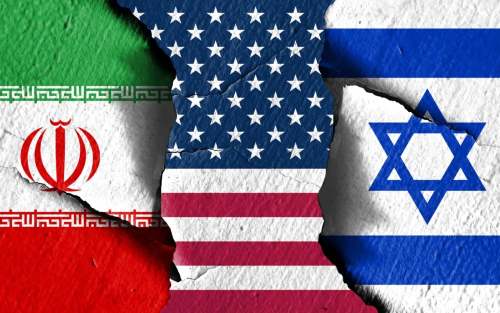
 The ongoing war involving the United States, Israel, and Iran represents one of the most sensitive and strategically complex conflicts in the contemporary international system. Unlike traditional wars centered on territorial conquest, the confrontation between these actors is largely strategic, technological, and economic. Military strikes, missile exchanges, cyber operations, and maritime pressure are occurring simultaneously across different domains. The conflict is shaped not only by military capabilities but also by strategic signaling, deterrence, and control of critical economic routes.
In the current phase of the conflict, coordinated military operations by the United States and Israel have targeted Iranian military infrastructure and strategic capabilities. Iran has responded through missile and drone attacks and by signaling its ability to disrupt regional security and global energy markets.
This form of warfare demonstrates a shift from conventional battlefield engagements to a broader strategic competition where economic disruption, maritime control, and psychological pressure play central roles.
Many analysts interpret this confrontation through the framework of game theory. Game theory studies how rational actors make strategic decisions when the outcomes depend on the choices of multiple participants. One of the most relevant models in this context is the “Chicken Game.”
In this strategic model, two rivals escalate confrontation while expecting the opponent to retreat first. Each actor attempts to demonstrate determination and strength because backing down may damage credibility and deterrence. However, if neither side retreats, the result can be a disastrous collision.
The interaction between the United States, Israel, and Iran strongly resembles this strategic scenario. The United States and Israel attempt to increase military pressure to weaken Iran’s strategic capabilities and limit its regional influence. Iran, on the other hand, increases the potential cost of the war by threatening regional stability and global energy supply routes. Each side signals willingness to escalate while hoping the opponent will step back before the conflict reaches catastrophic levels.
Another relevant game theory model is deterrence equilibrium. In this framework, each side attempts to create conditions in which the cost of aggression becomes too high for the opponent. Military deployments, missile capabilities, and strategic alliances all serve as instruments of deterrence. Instead of immediate total war, the actors create a situation in which escalation is balanced by fear of mutual damage. This produces a tense but unstable equilibrium in which the conflict continues at a controlled level.
Eastern strategic thought offers an additional perspective for understanding the behavior of the actors involved. Strategic traditions often associated with Asian military philosophy emphasize patience, indirect pressure, and exploiting structural weaknesses rather than relying solely on direct confrontation. In this approach, victory does not necessarily require defeating the opponent in a single decisive battle. Instead, the objective is to gradually alter the strategic environment until the opponent faces increasing costs and diminishing advantages.
Iran’s strategic posture reflects several elements consistent with this style of thinking. Rather than matching the military power of the United States and Israel directly, it focuses on asymmetric leverage. This includes missile capabilities, drone warfare, cyber activities, and the ability to influence regional security conditions.
The purpose of these tools is not necessarily to defeat stronger militaries outright but to complicate their strategic calculations and increase the cost of continued conflict.
A central element in this strategy is the strategic importance of the Strait of Hormuz. This narrow maritime corridor connecting the Persian Gulf to the Arabian Sea is one of the most critical energy chokepoints in the world. A large proportion of global oil exports and liquefied natural gas shipments pass through this route every day. Because of this concentration of energy trade, even the threat of disruption can cause major fluctuations in global markets.
Iran’s geographic position gives it the ability to influence security conditions in this strait. Naval deployments, missile systems, mines, and fast attack boats provide the capability to disrupt shipping if tensions escalate significantly. From a strategic perspective, this creates an asymmetric advantage. Even though Iran may not possess the same level of conventional military strength as its opponents, its control over this strategic chokepoint gives it leverage that affects the entire global economy.
In game theory terms, the Strait of Hormuz functions as a strategic pressure point. By threatening disruption of this route, Iran can impose indirect costs on its opponents and their allies. Energy prices can rise sharply, global supply chains can be affected, and economic uncertainty can spread far beyond the immediate region of the conflict. This transforms a regional war into an issue with worldwide economic consequences.
The United States and Israel pursue different but related strategic objectives within this confrontation. The United States focuses on maintaining regional stability, protecting maritime trade routes, and preserving its alliance structure in the Middle East. Israel’s primary objective is to reduce military threats that could endanger its national security, particularly missile systems and strategic infrastructure that might be used against it.
Iran’s objectives differ significantly. Its strategy is primarily defensive and survival-oriented, aimed at preventing strategic isolation and maintaining its influence within the regional balance of power. By demonstrating resilience and the ability to impose costs on its adversaries, Iran attempts to discourage long-term military escalation.
Game theory analysis suggests several possible outcomes for this war. One potential outcome is prolonged limited conflict. In this scenario, missile exchanges, targeted strikes, and regional tensions continue for an extended period without escalating into a full-scale regional war. Each side maintains pressure while avoiding actions that would trigger uncontrollable escalation. This creates a persistent but relatively contained strategic rivalry.
Another possible outcome is broader regional escalation. If additional states become directly involved or if maritime routes face severe disruption, the conflict could expand across multiple fronts. Such an escalation could significantly destabilize the Middle East and cause major disruptions to global energy markets and international trade networks.
A third possibility involves major economic consequences even without a large-scale military expansion. If insecurity in the Strait of Hormuz continues or intensifies, energy prices could increase dramatically. Because modern economies depend heavily on stable energy supplies, such disruptions could trigger inflation, market instability, and economic slowdown in many parts of the world.
Finally, the conflict could gradually move toward strategic exhaustion. Prolonged confrontation imposes economic and political costs on all actors involved. Over time, these pressures may create
incentives for diplomatic negotiations or informal arrangements that stabilize the situation. In game theory, this outcome emerges when continued escalation becomes more costly than compromise.
The current war between the United States, Israel, and Iran therefore represents not just a military struggle but a complex strategic interaction shaped by deterrence, economic leverage, and geopolitical geography. The dynamics of the conflict reflect both modern analytical frameworks such as game theory and older traditions of strategic thought that emphasize patience, indirect pressure, and control of critical strategic points. Whether the confrontation stabilizes or escalates further will depend largely on how each actor sevaluates the risks and costs associated with the next move in this highly sensitive strategic game.