 Tazeen Akhtar | Analysis for Pakistan in the World – Islamabad
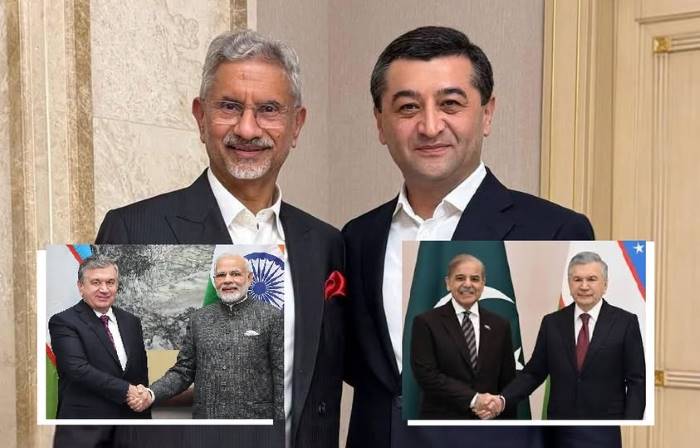
The elevation of India-Uzbekistan relations to a Comprehensive Strategic Partnership with a USD 5 billion trade target and defence co-production in Tashkent in August 2026, followed by the Jaishankar-Saidov implementation meeting in Baku on 23 October, carries multi-dimensional implications for Pakistan. It is not just a bilateral story – it is a reshaping of Central Asia’s connectivity map where Pakistan risks being bypassed.
1. STRATEGIC & GEOPOLITICAL IMPLICATIONS
a) India’s Central Asia Foothold Strengthened:
Pakistan has traditionally viewed Central Asia as its natural strategic depth. India had limited access due to geography. Now, with Uzbekistan as India’s anchor – the most populous (36 million) and militarily capable Central Asian state – New Delhi has secured a permanent perch in the heart of Eurasia.
b) Erosion of Pakistan’s Transit Leverage:
Pakistan’s long-held leverage was that India cannot reach Central Asia without Pakistani land transit, which Islamabad refused. India-Uzbekistan have rendered this leverage irrelevant by creating the Chabahar + INSTC + Trans-Afghan Railway alternative. Pakistan’s “blocking” tool is now ineffective.
c) Security Axis:
The DUSTLIK exercises, counter-terror JWG, and now defence co-production mean Indian military-industrial presence near Afghanistan’s northern border. For Pakistan, this creates a second front of Indian intelligence footprint.Uzbekistan shares Pakistan’s concern on Afghan stability but now coordinates that concern with India, not just Pakistan. Joint statements that “territory of Afghanistan should not be used for terrorist activities” are now India-Uzbekistan coordinated, potentially isolating Pakistan’s narrative on Afghanistan.
2. ECONOMIC & TRADE IMPLICATIONS
a) Direct Competition in Key Sectors:
Textiles: Uzbekistan is world’s 5th largest cotton producer. India has advanced processing. Their joint textile value chain directly competes with Pakistan’s textile exports to EU and Russia.Pharma: India is investing in Tashkent Pharma Park for local drug manufacturing. This will reduce Central Asia’s dependence on Pakistani pharmaceutical exports, which were growing under Pakistan’s Look Africa / Engage Central Asia policy.Uranium & Critical Minerals: Uzbekistan supplying uranium to India (framework for long-term supply signed) and cooperating on lithium, rare earths – resources where Pakistan has limited offerings.
b) Trade Target Reality Check:
USD 5 billion by 2030 between India-Uzbekistan is 4x current trade (USD 1.32 bn). If achieved, it will dwarf Pakistan-Uzbekistan trade (approx USD 350-400 million), making India the dominant South Asian partner for Tashkent. This shifts economic gravity.
c) Investment Diversion:
Over 300 Indian companies already in Uzbekistan. With Joint Working Group to remove non-tariff barriers, Indian FDI will surge into Tashkent’s special economic zones. Pakistani investors, already hesitant due to connectivity, will be further sidelined.
3. CONNECTIVITY – THE BIGGEST BLOW
This is the most critical implication for Pakistan.Pakistan’s Vision vs India’s Reality:
Pakistan’s vision: Peshawar-Kabul-Termez railway, Gwadar as gateway to Central Asia, CPEC extension to Central Asia.India’s reality being built:Chabahar Port trilateral (India-Iran-Uzbekistan) – operational, with fixed schedule container service proposed from Tashkent to JNPT MumbaiINSTC (7,200 km) – India-Iran-Azerbaijan-Russia-Central AsiaIndia-Chabahar-Iran-Turkmenistan-Uzbekistan multimodal corridor – single transport document, bypassing Pakistan entirely
Result: Uzbekistan now has TWO options to reach Arabian Sea: via Pakistan (Gwadar/Karachi) and via Iran (Chabahar/Bandar Abbas).
Tashkent will use both, but India’s investment makes Chabahar more attractive – cheaper insurance, no security issues of Afghanistan-Pakistan border, and Indian buy-in.
If Trans-Afghan Railway (Termez-Mazar-e-Sharif-Kabul-Peshawar) is built, Pakistan can still benefit. But if India-Uzbekistan via Iran becomes faster, Pakistan’s transit revenue dreams (USD 5-6 billion estimated) will not materialize. Pakistan becomes an option, not a necessity.
4. DIPLOMATIC & MULTILATERAL IMPLICATIONS
SCO & Central Asia Summit Dynamics: At SCO and India-Central Asia Summit, Uzbekistan now echoes India’s line on terrorism, connectivity (support for Chabahar) and UNSC reform (supporting India). Pakistan will find it harder to build a Central Asian bloc on Kashmir or other issues.
Uzbekistan’s Multi-Vector Balance: Tashkent is NOT anti-Pakistan. President Mirziyoyev maintains excellent ties with Islamabad (Pakistan-Uzbekistan Joint Commission, Preferential Trade Agreement signed 2023, defence MoUs).
But the “Comprehensive Strategic” label with India is one level higher than its partnership with Pakistan (Strategic Partnership).
Symbolically, India has moved ahead.
Narrative War: The Buddhist heritage project in Termez (Fayaz Tepa) – India projecting 2000-year civilizational link – creates soft power that Pakistan, despite shared Islamic heritage, has not matched with equal cultural investment in Uzbekistan.
5. WHAT PAKISTAN SHOULD DO – POLICY RECOMMENDATIONS
Do Not Overreact, But Act Fast:
Fast-Track Own Connectivity: Complete Pakistan’s side of Trans-Afghan Railway feasibility, offer Uzbekistan guaranteed, low-cost transit via Karachi Port and Gwadar with security guarantees – better than Chabahar’s US sanctions risk.
Activate Preferential Trade Agreement:
Pakistan-Uzbekistan PTA was signed but implementation is slow. Reduce duties on Uzbek cotton, fertilizers, and offer Pakistani rice, kinnow, pharma, cement at competitive rates.
Defence & Security Offer:
Offer joint production similar to India – Pakistan’s Heavy Industries Taxila and Pakistan Ordnance Factories have cost-effective products relevant to Uzbekistan.
Air and Banking Connectivity:
Resume direct flights Lahore-Tashkent (Uzbekistan Airways stopped), establish banking channels to avoid dollar transaction bottlenecks.
Leverage Brotherly Advantage:
Pakistan shares Islamic, cultural, and OIC solidarity with Uzbekistan. Use it – scholarships, military training at Kakul and Quetta, and religious tourism.
Trilateral with Turkiye-Azerbaijan-Uzbekistan:
Engage Uzbekistan in the Turkiye-Pakistan-Azerbaijan trilateral format to balance Indian presence.
BOTTOM LINE
India-Uzbekistan deepening does NOT mean Uzbekistan is abandoning Pakistan – Tashkent’s foreign policy is famously balanced. However, it does mean Pakistan’s monopoly as the gateway to Central Asia is over.
For 30 years, Pakistan relied on geography as its trump card. India has now bought a new map – Chabahar, INSTC, and Uzbek partnership. If Pakistan does not quickly make its own route cheaper, safer and faster, Central Asia will simply go around Pakistan.
As one Uzbek diplomat told Dunyo News: “We want to be friends with both Islamabad and New Delhi – but trade follows the easiest road.”Currently, the easiest road for Tashkent is increasingly the one that goes via Iran and India, not via Afghanistan and Pakistan.