KARAKORAM HIGHWAY – Eighth Wonder of the World – by – Munaza Kazmi

0
3627

The Karakoram Highway (KKH)is the highest and the lengthiest paved international highway of the world, it is also viewed as the 15th most beautiful road of the world for its scenic beauty. It was built by  Pakistan and China in a long span of almost twenty years (1959-78) due to the region’s unique topography, high-altitude mountains, snow-covered peaks and the toughest terrain.

The mighty road, manifesting the strategic relationship and geographical interdependence between the two nations – China and Pakistan – is also termed as Friendship Highway and it is referred to as the eighth wonder of the world.

It extends from Hasan Abdal, a historical town, especially with respect to Sikh community having a big Sikh Gurdwara named Punja Sahib in the Punjab province of Pakistan to the Khunjerab Pass , where it crosses into China and becomes China National Highway.

CPEC- a dream that is being realized after 50 years of the construction of KKH can be termed as the state of the art shape of China Pak Economic Corridor.

The magnificent 1300km road snakes through the Pamirs, Hindu Kush, Kunlaun Mountains, and Karakoram Range, to connect Kashgar in China to Gilgit Baltistan, KPK & Northern Punjab of Pakistan. At a maximum height of 4714 meters, it has the world’s highest border crossing at the Khunjerab Pass.

Whilst ensuring the most epic road trip ever, the highway is notorious for frequent land sliding, avalanches, and movement of glaciers under extreme weather conditions; the well-known Attabad Lake, that is now an attractive tourist destination is a living result of such land sliding. However, the highway was constructed on respective sides of China and Pakistan by their relevant organizations.

Construction at such a high elevation and harsh terrain defies conventional engineering wisdom. Hence, then government of Pakistan gave this task to the Army’s Corps of Engineers to undertake the work; thus, was born the Frontier Works Organization.

However, in the meanwhile 200 Chinese and over 800 Pakistani laborer and engineers lost their lives; some due to inclement weather, others to the harsh elevation of 4,693 meters (15,397 ft) above sea level.

To say inevitably the KKH had a huge impact on the lives of locals, their economic conditions improved manifold, likewise it turn out to be an open gateway for them to the rest of the world.

One of the major benefits it came with is the uplift in adventure tourism, as it is the corridor to the stunning mountain range of Pakistan, namely the gorgeous Himalayas, magnificent Hindukush and the mysterious Karakorum.

Furthermore, one can have a luxury of an uninterrupted and clear view of notorious Nanga Parbat and Rakaposhi.

Also, it is a gateway to the world’s largest glaciers, mainly Khujerab, Passu, Minapin and Ghulkin. Thankfully now it is no longer difficult to access the many high mountains, glaciers, and lakes in the area.
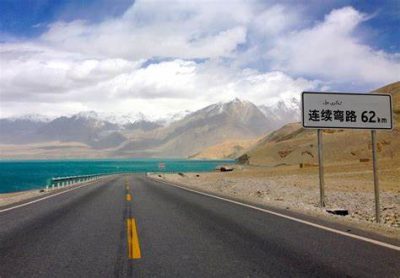
The KKH offers to its traveler a delightful experience of scenic beauty that would surely remain for life.  One would be travelling while witnessing the sights of world’s beautiful landscapes, the lands of fairies and djinns.

Moreover, it was deemed the third-best tourism site in the country and one of the most challenging engineering feats anywhere in the world.

Karakoram Highway is also known as The Silk Route, that relates to a lot of beautiful stories that I will be sharing in my next article.

Historically Karakorum Highway was a trade route, famously known as the ancient Silk Road Route, used by Chinese traders on their journey toward the Middle East, Central Asia and Europe.

However, under the CPEC, the Karakorum Highway has been upgraded as a motorway. It is the sustenance for the people of Gilgit-Baltistan besides the source of economic activities.

Moreover, Karakorum Highway can be viewed as the main channel of the CPEC and its impact are evident in the whole region as a beneficiary of trade between China and Central Asia, the Middle-East and Eurasia through the Arabian Sea at Gwadar.

(The writer is Islamabad based regular contributor of articles on tourism and travel. She can be reached at munazaqazmi@icloud.com)

LEAVE A REPLY

Please enter your comment!
Please enter your name here