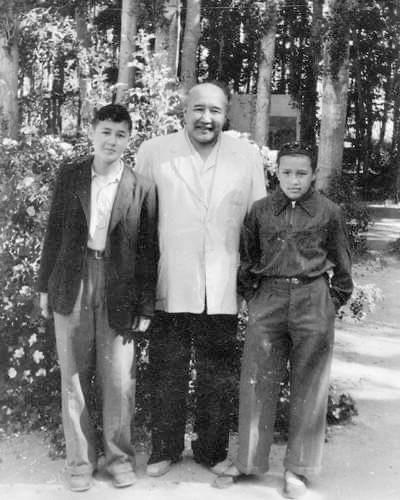
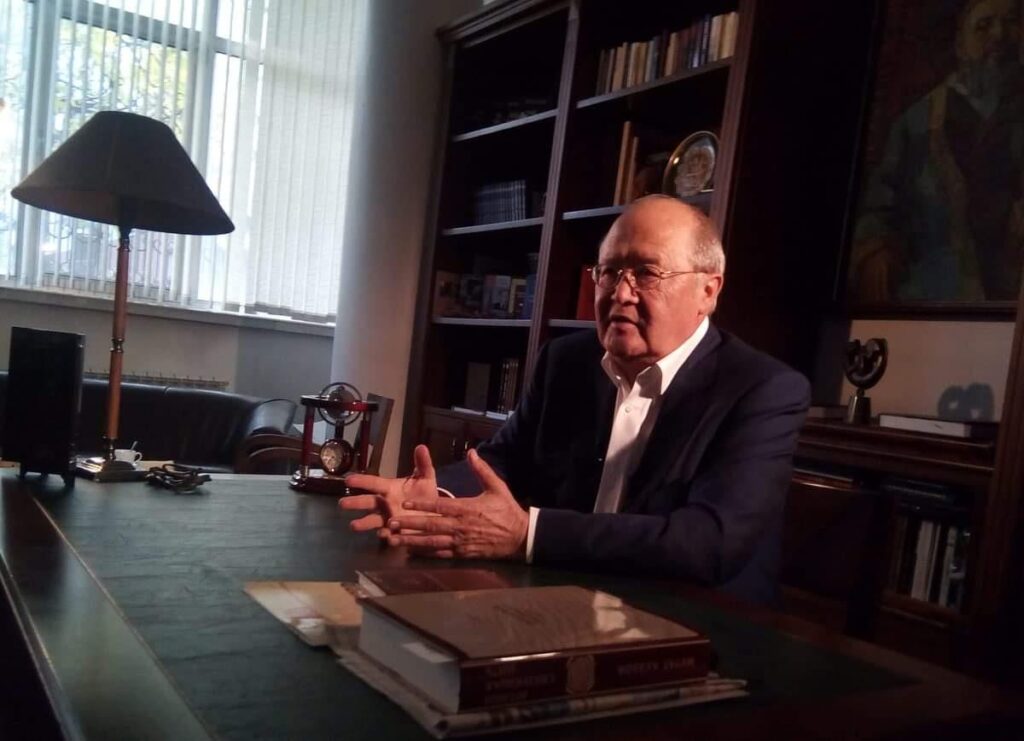
 Last year was the 125th anniversary of writer Mukhtar Auezov, one of Kazakhstan’s greatest literary figures, followed by another anniversary this year – the 80 year celebration of his son, Murat Auezov, on Jan. 1, which gave Kazakh society another opportunity to explore the creativity of the former from his son’s perspective.
No one could reasonably claim that Murat Auezov lived under the shadow of his famous father, on the contrary, he had a rich life and career of his own, and was, at the same time, fiercely protective of his father’s legacy. He took pride in promoting what was still unsaid about Mukhtar Auezov and his legacy. Much of his vivid and powerful memoir explores the historic and social context under which Mukhtar Auezov created his works.
In an interview with the Vecernii Almaty (Evening Almaty) newspaper in 2022, Murat Auezov goes on to say that one cannot fully understand Mukhtar Auezov’s works, including the renowned “The Path of Abai” without understanding the context of his father’s work, namely by deepening their knowledge of the history of the nomads and the steppe.
“The greatest tragedy for the Kazakhs in the 20th century was famine, collectivization, and the death of more than a third of the population in peacetime. The nomadic world collapsed and with it, hundreds of thousands of people, our culture, and language went into oblivion. All this was also accompanied by repression. And what is nomadism in the life of the Kazakh people and what is nomadism in general? It is a stunning vision of the history of world civilization,” said Murat Auezov.
According to him, the fall of nomadic civilization fundamentally influenced the works of local poets and writers, including his father.