 Central Asia Monitoring Desk Islamabad
The Adilet party secured a landslide victory in Kazakhstan’s Kurultai elections, winning 71.17% of the vote and 110 seats, according to the final results announced by the Central Election Commission (CEC) on Aug. 25.
The electoral rolls included 12,623,289 voters, and 9,351,539 cast ballots. Voter turnout stood at 74.08%. Adilet received 6,528,948 votes (71.17%) and secured 110 seats in the Kurultai.
The Auyl People’s Democratic Patriotic Party won 574,621 votes (6.26%) and 10 seats, while Respublica received 509,631 votes (5.56%) and secured nine seats. The Aq Zhol Democratic Party garnered 478,083 votes (5.21%) and eight seats. The Nationwide Social Democratic Party received 469,058 votes (5.11%) and also secured eight seats. The People’s Party of Kazakhstan received 285,395 votes (3.11%), while the Baytaq Green Party garnered 97,751 votes (1.07%). Both parties failed to clear the statutory 5% electoral threshold.
A total of 2.51% of voters selected the “against all” option. Under Kazakhstan’s election legislation, political parties must secure at least 5% of the vote to qualify for seats in the Kurultai. Five parties crossed the threshold based on the final results.
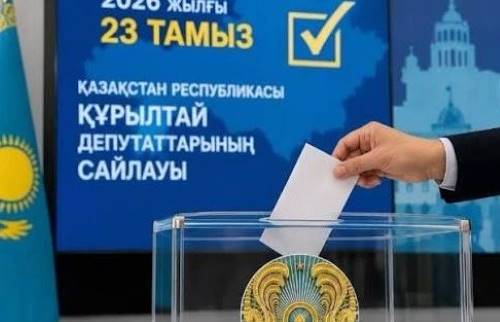
The Aug. 23 election was the first parliamentary election held under Kazakhstan’s new constitutional system. The 145-member Kurultai replaced the country’s former bicameral Parliament under the Constitution that took effect July 1.
Key Figures : Candidates , Gender , Age Groups, Domestic, Abroad
The CEC registered 545 candidates. They included 172 women, 74 candidates aged 35 or younger and 19 persons with disabilities; the combined share of these three categories was 43.9%, and the average candidate age was 45.4. Every party met the legal requirement that these groups collectively make up at least 30% of its candidate list.
The CEC reported 12,623,289 registered voters. Final participation was 9,351,539 voters, equal to 74.08%. According to the CEC’s 20:00 election-night reporting, turnout ranged from 43.23% in Almaty and 51.67% in Astana to 92.16% in Turkistan Region.
Voting took place at 10,423 polling stations, including 79 stations at Kazakh missions in 61 countries. Overseas voter lists contained 11,402 citizens. A total of 9,623 Kazakh citizens cast their ballots abroad, representing a voter turnout of 84.4% among registered overseas voters.
Importance of Snap Election
It is the first nationwide vote under the Constitution adopted on 15 March 2026 by 87.15% of referendum participants on 73.12% turnout. The Constitution entered into force on 1 July.
The election completes the transition from the former Senate and Mazhilis to a single 145-member Kurultai. All deputies (members of parliament) are elected for five years under the same nationwide rules; there are no appointed parliamentary seats or single-member constituency races.
The new Kurultai will immediately shape the institutional transition. The Government must resign its powers before the newly elected chamber; the Kurultai will consider presidential nominations for offices including the Vice President and Prime Minister and will exercise legislative, budgetary, appointment-consent and government-accountability powers.
The President has convened the first session for 28 August 2026 in Astana. The chamber’s composition will therefore affect the pace of implementing the new constitutional framework and the policy agenda presented to international partners.
Final turnout was considerably higher than the 54.21% recorded in the 2023 parliamentary election and broadly comparable to the 73.12% turnout in the March 2026 constitutional referendum.
International observation and assessments
The CEC accredited 777 international observers: 160 from 42 foreign states and 617 representing 13 international organisations. They included 138 parliamentarians from 41 countries, as well as representatives of election-management bodies from 22 states, including 11 commission chairs.
OSCE/ODIHR-led International Election Observation Mission (with OSCE PA and PACE): its preliminary statement described the election as technically well prepared, the campaign as generally calm and orderly, and opening and voting as overwhelmingly positive. It also identified limited political pluralism and raised concerns about aspects of transparency. A comprehensive final report will follow.
CIS Observer Mission: its interim report described the campaign as calm and organised, said parties campaigned without obstruction and noted broad opportunities and equal conditions. On election day, mission head Igor Petrishenko also praised the organisation of polling and election-commission support for voters. The CIS Observer Mission concluded that the elections were conducted at a high organisational level and described them as fair, competitive and open and as having been conducted in accordance with Kazakhstan’s legislation.
Shanghai Cooperation Organisation: Deputy Secretary-General T.R. Midhun said the mission had received no complaints and observed no violations during its first-half visits, while stressing that a final assessment would follow completion of all stages.
Organization of Turkic States: Deputy Secretary-General Nuru Guliyev said voting was open, complied with Kazakhstan’s legislation and protected ballot secrecy.
Who was there from Pakistan to Observe the Election Process ?
The Kazakh sources shared nothing about it but one representation from Pakistan was seen in shape of Secretary General Inter Parliamentary Congress IPC , Ms Sitara Ayaz. She visited some polling stations in Astana and examined the polling and the transparency. There is no evaluation available from her side in Pakistani press.