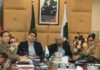
ISLAMABAD: The National Emergency Health Services (NEHS) hosted the second session of a consecutive training workshop on Basic Life Support (BLS) for journalists on 01 Oct 2024. The one day workshop featured the Director General NEHS Dr Sabina Imran Durrani and Dr Syed Fahad Shah in the chair in two segments. Journalists from different media organizations attended the workshop.
The workshop was held at NEHS Building, (NIH premises) PM’s National Health Complex, Park Road, Chak Shahzad, Islamabad. As most of the cases with journalists are about heart attack, the main part of the training consisted of basic information as what are the symptoms and how a trained journalist can help him or another colleague or family to get time space to shift the victim to the medical facility before he/she is dead.
If you’re trained in CPR and confident in your ability, start with 30 chest compressions before giving two rescue breaths. Use an automated external defibrillator (AED) if one is available and the person is unconscious. The device delivers shocks to reset the heart rhythm.
If the person having a heart attack loses their pulse or becomes unresponsive, the person administering first aid can begin CPR to help restore the heartbeat.
To perform CPR:
-
Find the best spot to compress — the center of the chest
-
Place one hand over the other and push hard and fast.
-
Interlock the fingers, placing the base or heel of the hands in the center of the chest on the sternum.
-
With the shoulders over the hands and elbows locked, press hard and fast to a depth of 2 inches, aiming for 100–120 compressions per minute.
-
Continue to perform this movement until they recover consciousness and start to move, someone else can take over, or the person performing CPR cannot continue any longer.
-
If possible, try to have multiple people take turns without pausing the compressions.
 The journalists were also apprised of the signs of a heart attack as:
-
Chest pain: Most heart attacks involve pain at the center of the chest that disappears before returning or lasts more than several minutes. The pain may feel like pressure, squeezing, or a tightness of the chest.
-
Pain or discomfort in other places on the upper body: The sensation may show up in one or both arms, the abdomen, back, neck, or jaw.
-
Shortness of breath: Shortness of breath may occur with or without chest pain or discomfort.
-
Other signs: Other possible heart attack symptoms include cold sweats, nausea, or a feeling of lightheadedness.
Dr Syed Fahad Shah answered the questions of the journalists regarding other diseases or situations that they may come across during performance of their duties. Dr Sabina Imran Durrani distributed the certificates of participation.
Directorate General National Emergency Health Services on Reinvigorating Mode – DG Opening New Avenues of Medical Tourism, Women Empowerment