 Syed Irfan Ul Hassan
The Kashmir issue is not just a territorial dispute between India and Pakistan. It is, above all, a deeply human crisis—one that has stretched across decades, generations, and borders. Rooted in history, soaked in the tears of thousands of families, and marred by politics and power, the Kashmir conflict continues to be one of the most pressing unresolved issues of our time.
Historical Background
The roots of the Kashmir issue trace back to the partition of British India in 1947. When India and Pakistan gained independence, princely states were given the option to accede to either country. Kashmir, a Muslim-majority region ruled by a Hindu Maharaja, Hari Singh, chose to remain independent initially.
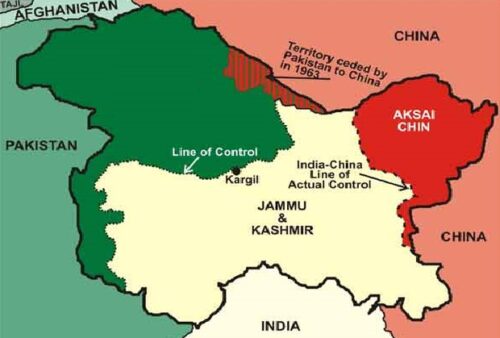
However, after tribal invasions from Pakistan’s side, the Maharaja signed the Instrument of Accession to India, which led to the first India-Pakistan war. A ceasefire was brokered by the United Nations in 1949, leading to the establishment of the Line of Control (LoC), dividing Kashmir into two parts: Indian-administered Jammu and Kashmir, and Pakistan-administered Azad Jammu and Kashmir.
This was supposed to be a temporary solution, pending a plebiscite to let the people decide their future. But the promised referendum never happened. Since then, the region has remained a bone of contention, with both nations claiming it in full but controlling only parts.
The Human Cost
While maps, politics, and speeches dominate the discourse, the real cost of the conflict is borne by the people of Kashmir. Thousands of lives have been lost since the insurgency began in 1989. Families have been torn apart, and an entire generation has grown up surrounded by fear, military presence, curfews, and violence.
The region has seen human rights violations from both sides. There are allegations of enforced disappearances, arbitrary arrests, torture, and restrictions on freedom of speech and movement. Children grow up seeing soldiers instead of playgrounds, mothers live in fear of losing their sons, and people are often caught between militants and the military.
Many Kashmiris feel like strangers in their own land—mistrusted, silenced, and misunderstood. They long not just for political resolution, but for dignity, respect, and peace. The trauma and psychological impact of decades-long unrest have created invisible wounds that may take generations to heal.
Politics and Polarization
Over the years, the Kashmir issue has been used as a political tool both domestically and internationally. In India, political parties have used nationalist rhetoric around Kashmir to mobilize support. In Pakistan, Kashmir has often been described as its “jugular vein,” used to unify public sentiment around national identity. This has turned the issue from a people-centric concern into a matter of political posturing.
The abrogation of Article 370 in August 2019 by the Indian government, which revoked Jammu and Kashmir’s special status, added a new layer of complexity. While the government argued it would lead to better integration and development, many Kashmiris saw it as a unilateral decision that disregarded their voice and autonomy. The move was followed by a long communication blackout and heavy military deployment, further alienating the local population.
Internationally, the issue has drawn mixed reactions. While the United Nations continues to view it as a disputed territory, major powers have largely avoided deep involvement, often prioritizing strategic relations over human rights concerns.
Media and Misrepresentation
Another major challenge is the portrayal of Kashmir in media. Too often, the narratives are shaped by national interests rather than ground realities. Either the region is painted solely as a hotbed of terrorism or romanticized as a paradise on earth, with little attention given to the daily struggles of the common people.
There is a growing need for balanced reporting that reflects the voices of the people who actually live there. The youth of Kashmir, with their dreams and aspirations, deserve to be heard not just as victims or militants, but as individuals—students, artists, thinkers, and leaders of tomorrow.
The Way Forward
Any resolution to the Kashmir issue must begin with empathy and dialogue. Guns and militarization can never solve a problem rooted in history, identity, and human dignity. The solution lies in listening—to the people of Kashmir, to their stories, their pain, their hopes.
Both India and Pakistan must take steps to rebuild trust and reinitiate dialogue, not just with each other, but also with the people of Kashmir. Economic development, education, and infrastructure are important, but without political and emotional healing, progress will remain superficial.
Confidence-building measures such as cross-border trade, easing of travel restrictions for divided families, cultural exchanges, and demilitarization of civilian spaces can help reduce hostility. The international community also has a role to play in encouraging peaceful dialogue and holding all parties accountable to human rights standards.
Conclusion
The Kashmir issue is not just a question of land or sovereignty—it is a question of humanity. It is about the lives of millions who deserve to live without fear, without suspicion, and with a sense of belonging. It is about children who should grow up dreaming of a bright future, not dreading a knock on the door at midnight.