 By Prof. Sohail Ahmed
 For decades, critics have argued that Israel has consistently sought to draw the United States into conflicts aligned with its own strategic interests. The current confrontation with Iran, under the leadership of Donald Trump, is increasingly being viewed through that same historical lens.
Many observers see parallels with the Iraq War—where intelligence, strategic narratives, and geopolitical motivations combined to justify large-scale military intervention which later on proved un justified.
Despite Iran’s repeated attempts to engage in negotiations and de-escalation efforts, the situation has instead moved toward open confrontation. Analysts suggest that Israel’s long-standing concerns over Iranian regional influence and military capabilities have once again shaped U.S. decision-making, ultimately pushing Washington toward military action.
A War Serving Multiple Agendas
The war appears to serve Israel’s doctrine of proactive defense—neutralizing perceived threats before they fully materialize. However, within the United States, critics argue that the conflict may also serve domestic political purposes. Some believe the Trump administration is using the war to divert attention from internal controversies and maintain political leverage ahead of the November 2026 midterm elections.
At the same time, the conflict reflects a broader ambition: projecting U.S. global supremacy. Recent actions in regions like Venezuela have reinforced the perception that Washington is willing to assert dominance beyond traditional theaters, signaling a wider strategy of geopolitical control.
Pre-War Alignments and Strategic Questions
One of the more puzzling developments preceding the conflict was the defense agreement between Pakistan and Saudi Arabia. This raised important questions: Why was such an arrangement necessary when the United States already had deep security commitments in the region? And how did Washington allow this parallel framework to emerge?
Some analysts interpret these developments as part of a larger geopolitical design—one that aimed to create friction between Iran and Pakistan, destabilize the Gulf Cooperation Council (GCC), and weaken regional powers. There were also concerns that Afghanistan could be used as a secondary front to pressure Pakistan. However, these plans did not fully materialize, largely due to Pakistan’s diplomatic balancing and internal preparedness.
Pakistan’s Strategic Role
Pakistan has emerged as a pivotal actor in this evolving crisis. Through careful diplomacy, it has managed to align with key regional and global players, including China and Russia, while maintaining connections across the Muslim world. Rather than being drawn into direct conflict, Pakistan has focused on stabilizing its borders and strengthening regional cooperation.
This approach has not only prevented escalation on multiple fronts but has also enhanced Pakistan’s standing as a potential mediator in the conflict.
Iran’s Resilience
Despite limitations in its conventional air and naval forces, Iran has demonstrated significant resilience. Its long-term investment in missile technology and irregular warfare capabilities has proven effective in countering more technologically advanced adversaries. This strategy has allowed Iran to maintain deterrence and resist external pressure.
Economic Impact of War and the Global Energy Crisis: Implications for the World and Pakistan
Shifting Global Dynamics
The conflict is also exposing cracks in traditional Western alliances. European Union and NATO partners have shown reluctance to fully support U.S. actions, partly due to economic disagreements, including tariffs imposed by the Trump administration. This lack of unity signals a weakening of U.S. influence among its traditional allies.
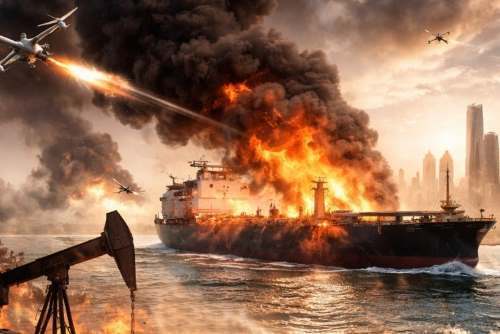
Meanwhile, Iran’s threat to block the Strait of Hormuz—a critical global energy route—has created significant economic uncertainty. Rising oil prices and disrupted supply chains are placing pressure on global markets and reshaping international priorities.
The current crisis may accelerate the formation of a new geopolitical bloc. A coalition involving Pakistan, China, Russia, Turkey, Azerbaijan, and parts of the GCC appears to be gradually taking shape. If Iran continues to resist effectively, this alignment could challenge U.S.-Israel dominance in the region and redefine global power structures.
If the conflict continues without decisive outcomes, the United States may eventually seek a negotiated exit that preserves its global image. In such a scenario, Pakistan could play a crucial role as a mediator, leveraging its relationships across competing blocs.
The Iran conflict is no longer just a regional issue—it is a turning point in global politics. It highlights shifting alliances, emerging powers, and the gradual transition toward a more multipolar world order.