 Tehran Four Meeting: No Breakthrough, But No Breakdown — The Dialogue Survives
Diplomatically Successful, Substantively Failed — but Strategically Necessary.
Tazeen Akhtar – Islamabad
The war that started on 28 February 2026 with US-Israeli strikes on Iran has entered its most dangerous and most political phase. On Monday 26 October 2026, Tehran hosted a meeting that many analysts are calling the last diplomatic off-ramp before the US midterm elections on 3 November.
The Tehran meeting was not designed to succeed. It was designed to buy time. In a region where time is measured in missile flight times, buying 10 days until US midterms is itself a success. The four countries did not agree on peace, but they agreed that war should not be decided without them. That is the new Middle East – regional solutions for regional problems, even if the solution is just to keep talking.
1- THE MEETING: Who, When, Why?
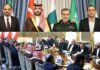
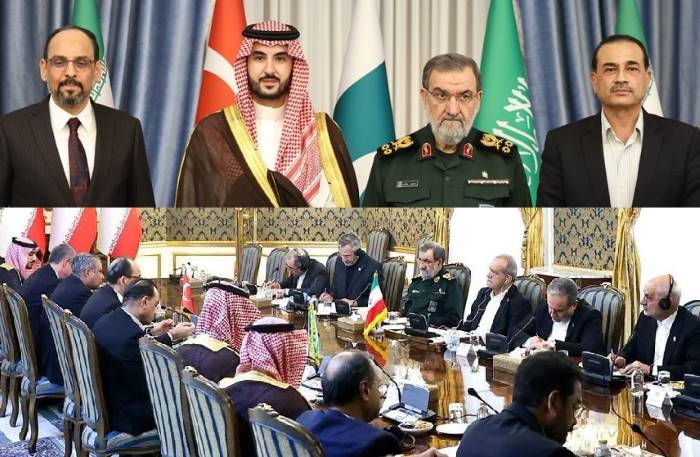
The meeting was held at the Saadabad Complex in Tehran.
Participants:
Iran: Host – Secretary of Supreme National Security Council (SNSC) Maj Gen Mohsen Rezaei, President Masoud Pezeshkian, Foreign Minister Abbas Araghchi
Saudi Arabia: Defence Minister Prince Khalid bin Salman – brother of Crown Prince MBS
Pakistan: Chief of Army Staff and Chief of Defence Forces Field Marshal Syed Asim Munir and Interior Minister Mohsin Naqvi
Turkiye: National Intelligence Organization (MIT) Chief Ibrahim Kalin
According to Deputy SNSC Secretary Ali Bagheri Kani, the meeting was proposed by Pakistan during Field Marshal Asim Munir’s visit to Tehran last week. Iranian officials described it as the first joint meeting of the four countries.
Context – The Mecca Pact:
On 7 August 2026, Saudi Arabia, Pakistan and Turkiye signed the Mecca Joint Defence Agreement (Mecca Pact / Makkah Defence Alliance). Under the agreement, an armed attack on one member is treated as an attack on all, with members committed to addressing threats to each other’s territorial integrity and sovereignty.
Its Strategic-Political and Defence Committee held an emergency meeting in Riyadh earlier this month to discuss rapid deployment of forces to Saudi Arabia after Houthi escalation.
Pakistan, which has been a key intermediary between Washington and Tehran since February, brought the three Mecca Pact partners to Tehran as a bloc.
2- AGENDA: What Was On The Table?
The agenda was deliberately kept broader than just US-Iran war:
Regional Security Architecture: Iranian concept of “endogenous security” – security originating from within the region, without external powers.
Fallout of US-Israeli Military Aggression Against Iran and its consequences
Israeli Activities, Palestine and Lebanon: Israel’s regional policies and developments in Gaza, Palestine and Lebanon
Strait of Hormuz & US Naval Blockade: Iran has claimed control over the Strait since April, targeting vessels without its authorization, while US imposed a naval counter-blockade on Iranian ports. Around a fifth of world’s oil and LNG used to pass through it.
Houthi – Saudi Front: The new front that has opened in the last month – Houthi missile and drone attacks on Saudi Arabia
De-escalation Channels: Saudi Foreign Ministry said the visit was intended to open negotiating channels to “prevent the return of military escalation.”
A senior Pakistani security official told Reuters the focus was to build a regional non-aggression network.
3- What Came Out?
A joint communiqué was issued after the meeting:
“The participants agreed to continue discussions to strengthen cooperation between the four regional countries, including for peace and security in the region.”
What it did NOT say:
No new defence agreement, no joint security system, no date for a future meeting
No announcement of Iran joining Mecca Pact
No joint statement on nuclear program
Iranian President Pezeshkian called on Muslim countries to strengthen cooperation against “Israeli aggression” and US-backed efforts to divide the Middle East.
After the meeting, Mohsen Rezaei told reporters that the visit showed that “US threats do not have much impact on countries around the world”.
Saudi Deputy Minister Rayed Krimly termed it part of continued efforts by Mecca Pact for de-escalation and promoting dialogue in support of mediation efforts by Qatar and Pakistan.
Analysts’ verdict: Goodwill, but no breakthrough. As Ali Vaez of International Crisis Group said: “Unless they arrive with a credible formula to bridge the US-Iran divide, they may find themselves with little more than goodwill in a race against the clock”.
4- WHAT TRUMP WANTS BEFORE MIDTERMS
The US midterms on 3 November 2026 decide control of Congress. With gas prices at $4.36/gallon, up from $2.98 before war, and only 31% Americans supporting military action against Iran, Trump is in a bind.
Trump’s core demands from Iran:
Nuclear: Tehran will not have a nuclear weapon – complete abandonment of nuclear program, reduction of enrichment to zero. VP JD Vance has said Iran must reduce enrichment to end war.
Hormuz Reopened Fully: 22 million barrels flowing daily as before, with none blocked by Iran. Trump claimed 22 million barrels passed last night alone.
No Sanctions Relief Without Concessions: Trump publicly denied offering sanctions relief: “I offered them NOTHING!”. He rejected Tehran’s September proposal to reopen Hormuz within 7 days in exchange for lifting blockade.
Political Win: A “military success” before elections. The White House asked Pentagon to prepare limited strike options before Nov 3, then on 8 October Trump wrote: “We will not be attacking Iran at any time prior to the Midterm Elections” while keeping blockade in full force.
Trump’s bet: Freeze war until after midterms, keep oil flowing via US Navy escort, then either get a deal on his terms or resume major bombing.
5- WHAT IS THE STAND OF IRAN
Tehran’s position, conveyed through Foreign Minister Araghchi:
Blockade Must Go First: End US naval blockade of Iranian ports, lift sanctions on Iranian oil sales, and release about $24bn in frozen Iranian funds as precondition.
Return to June MoU: Iran wants to return to memorandum of understanding agreed in June that laid out pathway to permanent settlement, which collapsed in July.
No Nuclear Talks Until Demands Met: An Iranian official said there would be no discussion of Iran’s nuclear program at Monday’s meeting and the issue would not be addressed until Tehran’s demands for ending the war were met.
Hormuz As Leverage: “Hormuz stays shut until US accepts Tehran’s deal” – Araghchi on 21 October. Tehran is watching US political calendar openly, believing rising energy prices put pressure on administration
Deterrence Threat: Iranian security officials told Reuters Tehran has drawn up plans to attack Gulf undersea cables if US and Israel attack again.
President Pezeshkian on 5 October called talks with US “meaningless” – “they have attacked us three times after talks”.
6- GAPS between Trump and Iran
Trump wants Zero Enrichment of Nuclear
Iran wants Right to enrichment under NPT
Trump wants Homuz open unconditionally
Iran wants Hormuz open only after blockade
Trump want to keep blockade as pressure
Iran wants End of blockade as precondition
Trump says No frozen funds release before deal
Iran seeks $23 bn release before deal as trust building
Trump wants No linkage to Yemen/ Israel
Iran wants inclusion of Yemen ceasefire and Lebanon
The only bridge so far: Qatar-Pakistan mediation proposing a phased roadmap – gradual reopening of Strait, 60-day region-wide ceasefire, then nuclear talks. US counter-offered sanctions relief and releasing frozen funds in exchange for nuclear concessions, but Trump denied it.
7- HOUTHI ISSUE: Is It Part of Negotiations? Yes, and it is now central.
New Front: Since September, Iran-aligned Houthis have escalated missile and drone attacks on Saudi Arabia – targeting airports, oil facilities, even near Mecca and Medina region. US State Department issued Oct 21 order for non-emergency staff to leave Saudi Arabia due to Houthi threat.
IRGC Demand: Hossein Mohebbi, IRGC spokesman for Yemen portfolio, told AFP that ending hostilities in Yemen was among Tehran’s demands for a comprehensive settlement.
Mecca Pact Dilemma: Saudi Arabia intercepted another wave of missiles and drones on Sunday. Saudi expects its Mecca Pact partners Pakistan and Turkiye to help, but Pakistan and Turkiye cannot afford to commit troops on the ground in Yemen.
US Secret Channel: Trump Admin quietly opened direct talks with Houthis as well, separate from Iran talks, trying to decouple Houthi campaign from Iran’s wider strategy.
Conclusion: The Tehran four-nation meeting is not about ending US-Iran war alone. It is about preventing a second war – Saudi-Houthi war – from merging with the first.
For Pakistan, it is a tightrope: Member of Mecca Pact committed to defend Saudi Arabia, and simultaneously mediator with Iran, and Islamabad has already restricted overland border trade with Tehran amid US blockade.
If Houthi attacks continue, Saudi Arabia will push Mecca Pact for collective action. If US resumes bombing Iran after midterms, Iran may use Houthis as retaliation arm. Tehran knows this – that is why Yemen is now on its negotiating table.
“A Managed Failure That Prevented a Bigger Failure”
If we measure by Concrete Outcomes — It failed. No oil price down, no Hormuz open, no Houthi missiles stopped.
If we measure by War Prevention — It succeeded. It delayed US-Iran resumption of bombing, it gave Saudi Arabia a reason not to invoke Article 1 of Mecca Pact yet, and it gave Trump cover to keep his 8 October promise: “We will not attack Iran before Midterms.”
1- WHY IT CAN BE CALLED SUCCESSFUL:
a) It Happened at All: In the middle of a US naval blockade, Strait of Hormuz closed, IRGC threatening Gulf cables, and Saudi cities under Houthi missile attack — that three US-allied Mecca Pact members flew into Tehran is itself a message. US pressure to isolate Iran failed.
b) Iran Did Not Say No: Iran could have refused to meet Mecca Pact. Instead, President Pezeshkian met them personally. Foreign Minister Araghchi sat in. That means Tehran still wants a regional track, not just US track.
c) Pakistan’s Mediation Role Validated: The meeting was proposed by Field Marshal Asim Munir last week in Tehran. That Islamabad can bring Riyadh-Ankara-Tehran to one table after two visits in one week shows Pakistan is now the only credible bridge. Saudi Deputy Minister Rayed Krimly himself said it was part of Qatar and Pakistan mediation.
d) Houthi File Brought Under Regional Roof: For the first time, Houthi attacks on Saudi Arabia were discussed with Iran in a formal four-party format. That moves Yemen from battlefield to table.
2- WHY IT CAN BE CALLED FAILED:
a) Joint Communiqué is Hollow: Read the official text: “Agreed to continue talks to strengthen cooperation…”No new defence agreement. No joint security system. No date for next meeting. No mechanism for Hormuz. No ceasefire for Yemen. No mention of nuclear issue. This is diplomatic language for “We agreed to keep talking because we agreed on nothing else.”
b) Core Issues Untouched: Iran said clearly: Nuclear will not be discussed until US lifts blockade. Mecca Pact members have no authority to lift US blockade. So they cannot deliver what Iran wants, and Iran cannot deliver what US wants (Hormuz open).
c) Trust Deficit Too Deep: As Dr. Majid Rafizadeh noted: “Little has changed from an Iranian strategic calculus and the actors don’t have leverage needed to affect Iran’s strategic thinking.”