COP29 Monitoring Desk
ISLAMABAD: Kazakhstan participated in COP29, held in Baku, Azerbaijan, from November 11 to 22, 2024. The delegation, led by President Kassym-Jomart Tokayev, Minister of Ecology Yerlan Nyssanbayev, and Special Representative for International Environmental Cooperation Zulfiya Suleimenova, presented several initiatives and proposals aimed at addressing climate change and promoting sustainability.
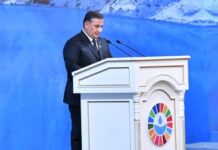
President Kassym-Jomart Tokayev highlighted critical efforts to tackle climate change at a Nov. 12 World Leaders Climate Action Summit, held as part of the 29th Conference of the Parties to the UN Framework Convention on Climate Change (COP29) in Baku.
During his speech, Tokayev reaffirmed Kazakhstan’s commitment to the global climate agenda and emphasized the importance of international cooperation in combating climate change. He reminded the forum participants of Kazakhstan’s ambitious goal of achieving carbon neutrality by 2060.
Pakistan in the World -May/ June 2023
Modern technologies
Tokayev noted that access to predictable financing and modern technologies is vital to achieving these goals. He stated that the New Collective Quantified Goal (NCQG) for climate finance should prioritize regions most impacted by climate change, including landlocked developing countries.
“Despite accounting for only 1% of global emissions, Central Asia faces multiple climate risks. To enhance our climate response we must now leverage technologies, such as artificial intelligence, satellite monitoring and other digital tools for early warning and better water and land management,” said Tokayev.
Sustainable agriculture
Tokayev emphasized the importance of the transition to sustainable agriculture. He noted that with its 200 million hectares of agricultural land, Kazakhstan is well-positioned for carbon farming—agricultural production methods that reduce emissions and improve soil quality. He invited interested parties to explore Kazakhstan’s opportunities in this industry.
“Our country exports 43% of the world’s uranium supplies and therefore plays a critical role in the low-carbon nuclear power generation. In October, a nationwide referendum supported construction of the nuclear power plant in Kazakhstan. We are committed to ensuring the project safety and efficiency through partnership with global technology leaders in this area,” he said.
Water resources
Tokayev also focused on the problem of global water resources. He highlighted that climate change affects the global water cycle, and water-related disasters account for over 80% of all-natural disasters, noting unprecedented floods that hit Kazakhstan in spring. Tokayev underlined the importance of introducing a comprehensive disaster risk management system to respond to and recover from future natural disasters.
President Tokayev Underlines Kazakhstan’s Role in Tackling Water Security Challenges at One Water Summit
“This December we are partnering with France to host the One Water Summit to drive the momentum on the water agenda. This summit will address issues in global water governance. The Caspian Sea is in danger. Saving the biggest lake in the world is a matter of common concern that requires long-term international cooperation. We support the initiative of President Aliyev to establish a Group of Experts from the Caspian States. Kazakhstan is intensifying its activities to preserve the Aral Sea,” the President added.
Tokayev expressed gratitude to President of Azerbaijan Ilham Aliyev for organizing the summit, reiterated that Kazakhstan is strongly committed to multilateral efforts to form a just, inclusive and transparent climate agenda, and confirmed its readiness for further cooperation with international partners.
Pakistan in the World – Dec 2023
During COP29, Kazakh President Kassym-Jomart Tokayev presented several key initiatives and proposals:
1-Carbon Neutrality Commitment: Reaffirmed Kazakhstan’s goal to achieve carbon neutrality by 2060, emphasizing its commitment to the global climate agenda.
2-Climate Finance for Vulnerable Regions: Advocated prioritizing regions most impacted by climate change, including landlocked developing countries, under the New Collective
3-Quantified Goal (NCQG) on climate finance.
4-Innovative Climate Solutions: Highlighted the role of technologies like AI, satellite monitoring, and digital tools in early warning systems and water and land management.
5-Methane Emission Reduction: Reported significant progress in methane reduction projects across coal, oil, gas, and agriculture sectors, achieving a three-fold decrease.
6-Carbon Farming Potential: Emphasized Kazakhstan’s ability to leverage 200 million hectares of agricultural land to reduce greenhouse gases and improve soil quality.
7-Nuclear Energy for Emission Reduction: Announced plans to construct a nuclear power plant, approved by a nationwide referendum, with global technology partnerships ensuring safety and efficiency.
Presidents of Azerbaijan, Kazakhstan, Uzbekistan Sign Landmark Agreement on Green Energy Production & Transfer
8-Water Resource Management: Proposed a comprehensive disaster risk management system to address climate-induced water cycle disruptions, citing recent floods in Kazakhstan.
9-Caspian Sea and Aral Sea Conservation: Supported regional initiatives, including a Caspian states expert group on environmental challenges and intensified international efforts to preserve the Aral Sea.
10-Kazakhstan’s Minister of Ecology and Natural Resources, Yerlan Nyssanbayev, proposed the following:
11-Carbon Farming Initiative: Highlighted the need for investment in restoring degraded lands to combat desertification and enhance carbon sequestration through sustainable agricultural practices.
12-Global Low-Carbon Platform: Proposed creating a platform to consolidate greenhouse gas reduction efforts via emissions trading systems (ETS) and enhance international carbon markets.
13-Climate Finance Advocacy: Stressed the importance of defining and expanding green financing mechanisms to support global and regional climate initiatives.
14-Support for Landlocked Developing Countries (LLDCs): Advocated coordinated international actions to address the unique climate challenges faced by LLDCs.
Kazakhstan’s Special Representative for International Environmental Cooperation, Zulfiya Suleimenova, proposed the following:
Methane Emissions Reduction: Announced regulatory efforts to reduce methane venting and leaks in the oil and gas sector, with a National Program for Methane Emissions Reduction set for completion by COP30 in 2025.
Climate Finance Advocacy: Called for predictable funding, concessional finance, and grants to meet Kazakhstan’s Nationally Determined Contributions (NDCs) while ensuring economic growth.
Climate Transparency Leadership: Co-led a High-Level Dialogue on Advancing Climate Transparency, emphasizing the importance of accurate reporting to track collective climate progress.
Pakistan in the World – November 2024